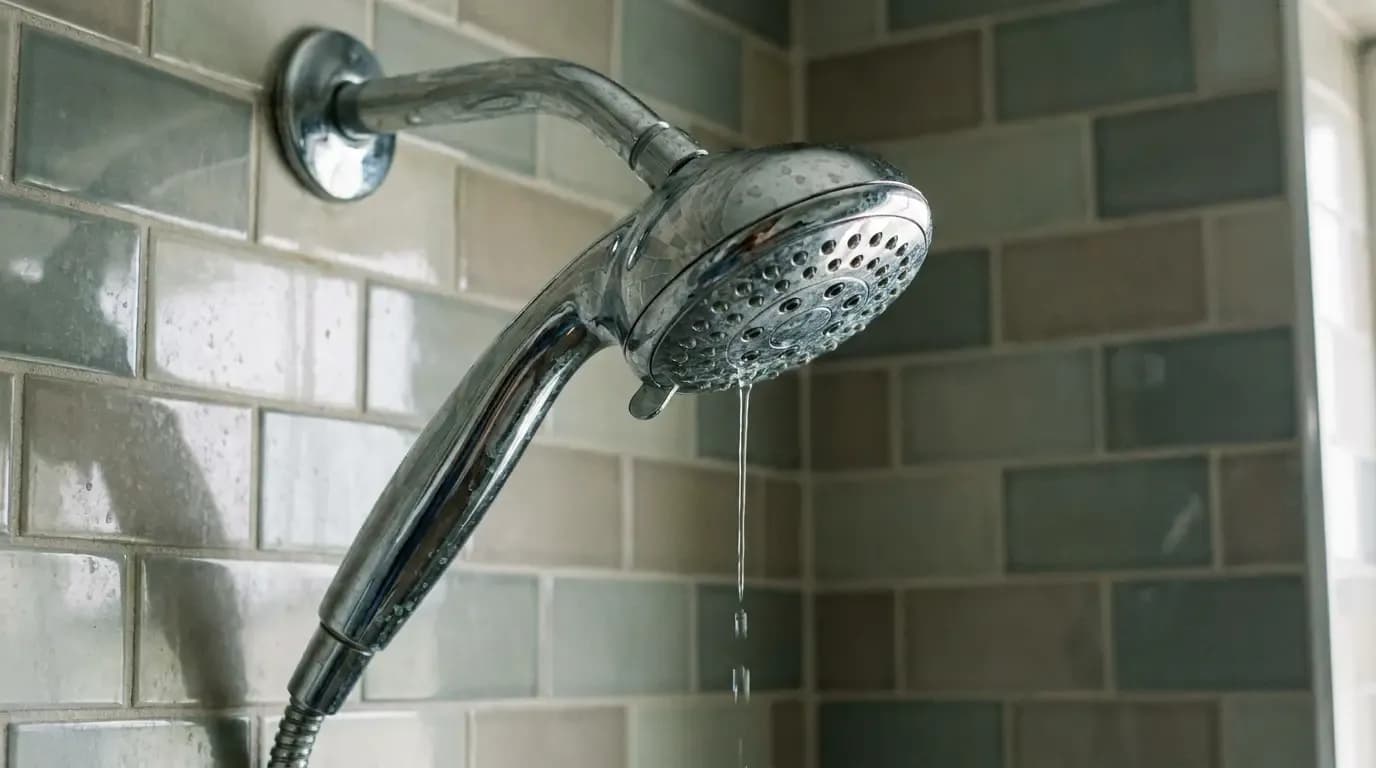
Check the Cause Before Buying a Pump
A booster pump can help, but it will not fix a clogged shower head or a half-closed valve. The smartest first step is to work out where the pressure is being lost. Start with how widespread the problem is.
- One tap or shower only: the cause is usually local, such as a blocked aerator or shower head.
- Every tap in the home: look at valves, filters, the main supply and the pipework.
- Only at certain times: demand in the building or simultaneous use may be involved.
8 Common Causes of Low Water Pressure
- Blocked aerator or shower head: mineral deposits narrow the outlets.
- Partly closed isolating valve: a valve left half-closed after repairs restricts flow.
- Clogged water filter: filters need regular cartridge changes.
- Hidden leak: water lost before it reaches the tap lowers pressure.
- Scaled or narrowed pipes: older pipework can build up deposits inside.
- Faulty mixer cartridge: restricts flow on one fixture.
- Too many fixtures in use at once: showers and washing machines compete for flow.
- Supply conditions: higher floors or peak-hour demand can reduce pressure at the tap.
When a Booster Pump Makes Sense
If your fixtures and pipes check out but pressure is still too weak, a pump may be the answer. It is most useful when:
- Pressure is low across the whole home even after servicing
- You have a storage tank and need to deliver water to upper floors
- Your shower or heater needs more flow to work properly
| Situation | Better First Step | Pump Needed? |
|---|---|---|
| Only the shower is weak | Clean or replace the shower head and mixer | Usually no |
| Whole house weak after filter change | Check valves and pipework | Maybe |
| Tank-fed home with weak upper floors | Assess supply and tank layout | Often yes |
| Pressure drops suddenly | Look for a leak or closed valve | No |
Important: In a shared building, check with your management before adding a pump to a mains-fed system. Pump arrangements that draw directly from the supply may not be permitted, and a storage tank is often the recommended setup.
What a Good Pump Installation Includes
- A pump sized for your fixtures and usage
- Isolating valves and unions for easy servicing
- Protection against dry running
- Vibration-reducing mounting for quieter operation
- A pressure check at the taps after installation
Our plumbers diagnose the cause first and recommend a pump only when it will actually solve the problem.
Pressure vs Flow: What Is the Difference?
People often use the words pressure and flow as if they mean the same thing, but they describe different qualities. Pressure is the force pushing water through the pipes. Flow is the volume of water that actually comes out of the tap. You can have decent pressure but poor flow if a pipe is narrowed or a filter is clogged. Understanding which one is the problem helps you choose the right solution.
How to Do a Simple Pressure Check at Home
You do not need special tools to get a rough idea of where the problem lies. Try this simple routine.
- Open the kitchen tap fully and note how strongly the water comes out.
- Do the same at the bathroom basin and the shower.
- Compare each outlet. If only one is weak, the problem is local to that fixture.
- Open a tap in a different room while someone showers. A big drop suggests the supply is struggling to serve several outlets.
- Check the water filter and any isolating valves. Make sure the valves are fully open.
Fixing Local Problems Before Blaming the Supply
Descaling Shower Heads and Aerators
Minerals in the water can build up on shower heads and tap aerators. Unscrew the part and soak it in a mild descaling solution suitable for the material, then rinse and refit. Many weak showers return to full strength after this simple clean.
Replacing Water Filter Cartridges
Under-sink and whole-house filters slow the flow as they fill with sediment. If your pressure dropped after you installed a filter, or it has been a long time since the last cartridge change, replace the cartridge before looking at anything else.
Checking Valves
After any plumbing work, isolating valves are sometimes left partly closed. Open them fully and see whether the flow improves.
What Is a Booster Pump and How Does It Help?
A booster pump takes water from the supply or a tank and pushes it through your pipes with more force. In the right setup, it gives noticeably better pressure to showers, taps and appliances. A well-chosen pump also starts and stops smoothly, without constant switching or loud noise.
It is not a miracle cure, though. A pump cannot create water that is not available. If the supply into your home is very limited, or if pipes are badly restricted, the pump simply moves the problem. That is why diagnosis comes first.
Choosing the Right Pump for Your Home
| Factor | Why It Matters |
|---|---|
| Number of bathrooms and fixtures | More outlets need more flow capacity |
| Number of people at home | Higher usage means the pump works harder |
| Water source (mains, tank) | Determines the type of installation required |
| Noise level | Important in apartments and homes with bedrooms near the pump |
| Built-in protection | Helps prevent damage if the pump runs dry |
| Servicing access | Easy access keeps maintenance simple |
Signs Your Existing Pump Needs Attention
If you already have a pump, these signs mean it is time for a check before it fails completely.
- The pump turns on and off rapidly, even when only a single tap is open
- Loud grinding, humming or rattling sounds
- Pressure that fluctuates from strong to weak
- Water leaking from the pump body or its connections
- The pump runs continuously after taps have been closed
- The pump trips the power supply
Important: If the pump runs but no water flows, switch it off. Running a pump dry can overheat and damage it quickly.
Why Pump Installation Quality Matters
Two identical pumps can behave very differently depending on how they are installed. A careful installation includes the following.
- Secure mounting that reduces vibration and noise
- Flexible connectors that stop vibration travelling through the pipes
- Non-return valves in the correct direction
- Isolating valves so the pump can be serviced without shutting down the whole home
- Correct pipe sizing so the pump is not forced to push through a bottleneck
- Proper electrical connection by a qualified person where required
Living With a Pump: Simple Care Tips
- Listen for changes in sound, as new noises are early warnings.
- Keep the area around the pump dry and well ventilated.
- Look for small drips at the connections every few months.
- If you leave home for a long time, consider turning off the pump.
- Arrange periodic servicing, especially if the pump is old.
Common Questions Homeowners Ask
Will a pump make my water bill higher?
A pump itself does not create extra water usage, but stronger pressure may encourage longer showers. It will also use some electricity when running.
Can a pump fix pressure on the top floor?
It can help when the supply is adequate but struggles to reach upper levels. A plumber should assess your tank, pipes and layout first.
Is a pump noisy?
Quality pumps installed with proper mounting are fairly quiet. Noise usually points to poor installation, air in the line or a worn component.
Summary
Low water pressure has many possible causes, and the cheapest fix is often the simplest one. Clean the fixtures, check the valves and filters, and look for leaks before spending money on equipment. If those checks do not solve it, a correctly sized and installed booster pump can transform daily comfort at home.
Need a Plumber in Singapore?
Talk to the team at SG Plumbing Service Pte Ltd for a clear quote before any work starts.
- Phone: +65 8434 3660
- WhatsApp: +65 8544 8704
- Email: sgplumbingservice@gmail.com
- Address: 234 Serangoon Road, #04-234E, Singapore 218083
- Website: www.sgplumbingservice.com