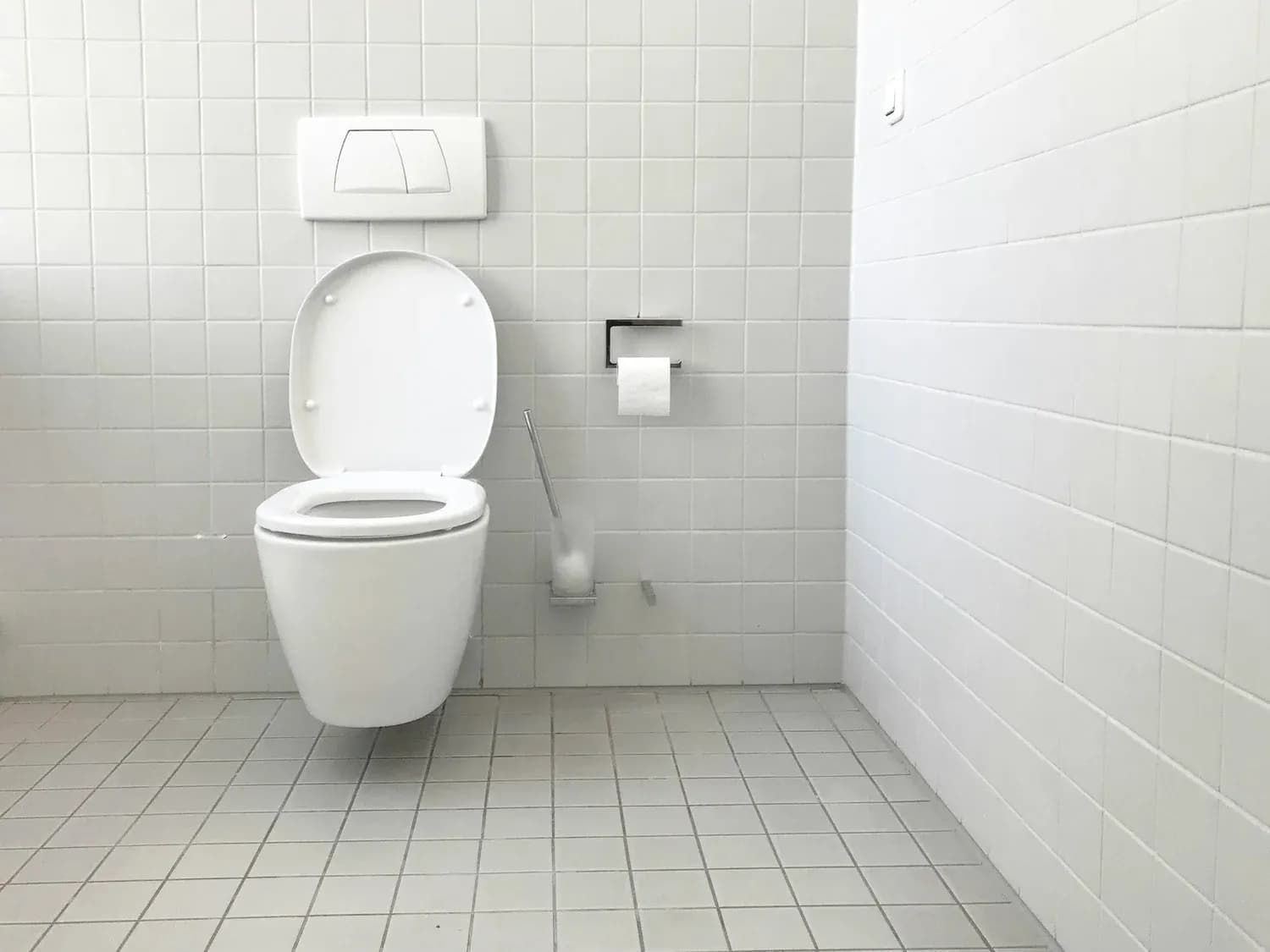
How Your Toilet Cistern Works
Most toilets use a simple cycle. Pressing the flush button lifts a seal and releases water into the bowl. The seal then drops back, and a float-controlled inlet valve refills the cistern until it reaches the set level. Almost every common problem comes from one of these parts wearing out or going out of adjustment.
Common Symptoms and Likely Causes
Symptom | Likely Cause | What to Check |
|---|---|---|
Water keeps running into the bowl | Worn flush valve seal | Look for water trickling down the bowl wall |
Cistern hisses or refills repeatedly | Faulty inlet valve or float set too high | See if water reaches the overflow level |
Weak or incomplete flush | Low water level or blocked rim jets | Compare the water level to the marked line |
Slow refill | Partly blocked inlet filter or half-closed angle valve | Check the small valve behind the toilet |
Water at the base of the toilet | Failed seal or loose connection | Dry the area and watch where moisture returns |
Simple Checks You Can Try
Lift the cistern lid carefully and check that nothing is catching the flush button linkage.
Make sure the float arm moves freely and is not rubbing against the cistern wall.
Confirm the water level sits at the manufacturer's marking, if there is one.
Add a few drops of food colouring to the cistern. If colour appears in the bowl without flushing, the flush valve seal is leaking.
Why a Running Toilet Is Worth Fixing Quickly
A toilet that leaks slowly can waste a surprising amount of water over a month without making any noise. It will show up on your water bill and will not fix itself. Worn rubber seals only get worse with time.
If the Flush Is Weak
Weak flushing can also come from a partial blockage in the bowl or drain. If the water rises high before slowly dropping, or you hear gurgling from other drains, avoid repeated flushing. It could overflow. A plumber can clear the line and check whether the problem is in the toilet itself or further down.
Good to know: Replacement parts differ between brands and models. If you are unsure which part fits, a plumber can bring the right components so the repair is done in one visit.
When to Call a Plumber
The toilet keeps running after you have adjusted the float
You see water around the base of the bowl
The bowl blocks often or flushes weakly after cleaning
The cistern or bowl is cracked
We repair and replace toilet bowls, cisterns and flush mechanisms in HDB flats, condos and landed homes.
Meet the Parts Inside Your Cistern
Lifting the lid and seeing a cluster of plastic parts can feel intimidating, but each part has a simple job. Knowing the names makes it easier to understand what a plumber is explaining.
Flush button or lever: the part you press, connected to the release mechanism.
Flush valve and seal: opens to release water into the bowl and closes to hold water in the cistern.
Inlet (fill) valve: lets fresh water in after each flush.
Float: rises with the water and tells the inlet valve when to shut off.
Overflow pipe: a safety outlet that carries excess water into the bowl instead of onto the floor.
Angle valve: the small isolating valve on the wall that controls water to the cistern.
Understanding Dual-Flush Systems
Many toilets in Singapore homes use dual-flush buttons, with a smaller flush for liquid waste and a fuller flush for solid waste. This design saves water, but it also means there are more moving parts. If the half flush works but the full flush does not, or the other way round, the problem often lies in the linkage or the way the button is adjusted rather than in the whole toilet.
Fixing a Running Toilet: A Closer Look
When the Flush Valve Seal Leaks
This is the most common reason for a toilet that runs on its own. The rubber seal hardens or gets coated in deposits, so it no longer closes tightly. Water trickles into the bowl, the cistern level drops and the inlet valve opens again to refill it. You may hear the toilet top up every few minutes. Replacing the seal, or the whole flush valve assembly, usually fixes it.
When the Inlet Valve Will Not Shut Off
If you hear continuous hissing and water reaches the overflow pipe, the inlet valve or the float may be faulty. Debris can stop the valve from sealing, and worn washers may no longer hold back pressure. Replacing the inlet valve is a straightforward job for a plumber.
When the Float Is Out of Adjustment
If the float is set too high, the water level rises until it spills over the overflow pipe. Adjusting it to the correct level can stop the waste instantly. Always follow the markings or instructions for your particular cistern.
Fixing a Weak Flush: A Closer Look
A flush that seems to lack power can come from several different faults. Work through the likely causes in order.
Low water level in the cistern. Less water means less force. Check the level and adjust the float if needed.
Partly closed angle valve. The cistern refills slowly or does not fill completely.
Blocked rim jets. Small holes under the rim can clog with mineral deposits, reducing how well the bowl rinses.
Partial blockage in the bowl or drain. Water drains slowly and leaves waste behind.
Worn flush mechanism. The seal may not lift fully, so less water is released.
Cleaning Rim Jets Safely
Mineral deposits are a common reason for a poor rinse. You can often improve things with careful cleaning.
Use a mild toilet cleaner suitable for the bowl surface
Clear the small holes under the rim with a soft brush or a small piece of wire, being gentle to avoid scratching the ceramic
Never mix different cleaning products, as some combinations produce harmful fumes
Ventilate the bathroom while cleaning
Troubleshooting Quick Reference
What You Hear or See | Probably Wrong | Your Next Move |
|---|---|---|
Hissing that never stops | Inlet valve or float | Close the angle valve and call a plumber |
Toilet refills by itself every few minutes | Flush valve seal leaking | Do the food colouring test, then arrange a repair |
Water trickling over the overflow pipe | Float set too high | Adjust the float or call for help |
Bowl water rises then drains slowly | Partial blockage | Stop flushing and call a plumber if a plunger does not help |
Wet floor around the base | Leaking seal or cracked part | Turn off the angle valve and book a repair |
When Replacing the Toilet Makes More Sense
Repair is the right choice for most faults, but there are times when replacing the toilet bowl or cistern is the better long-term option.
The ceramic is cracked or leaking
Parts are no longer available for an old model
You are renovating the bathroom anyway
The toilet is very old and repairs keep recurring
You want a more efficient or more comfortable design
Tip: If you replace the bowl, ask the plumber to check the floor trap, the waste outlet position and the angle valve at the same time. Replacing a worn valve while the toilet is out costs very little and prevents future leaks.
Healthy Habits for Your Toilet
Only flush toilet paper and human waste. Wipes, cotton buds and sanitary products can block pipes even when labelled as flushable.
Do not use the cistern as a place for strong chemical tablets, which can damage rubber seals over time.
Report a running toilet to a plumber early. Small seal problems are cheap to fix.
Keep the angle valve free of limescale and make sure it can still be turned.
What Happens During a Professional Toilet Repair
The plumber checks the symptoms and tests the flush.
The cistern parts are inspected for wear and deposits.
Faulty components are replaced with compatible parts.
The water level and float are set correctly.
The toilet is flushed several times and checked for leaks at every connection.
Most toilet repairs are completed in a single visit, particularly when the plumber brings common spares. Describing the problem clearly and sharing the toilet brand, if you know it, helps speed things up.
Wrapping Up
A toilet that runs, hisses or flushes weakly is telling you something. In many cases, the cause is a small worn part that can be replaced quickly. Handling it early saves water, protects your bill and spares you the stress of a toilet that fails when you need it most.
Need a Plumber in Singapore?
Talk to the team at SG Plumbing Service Pte Ltd for a clear quote before any work starts.
Phone: +65 8434 3660
WhatsApp: +65 8544 8704
Email: sgplumbingservice@gmail.com
Website: www.sgplumbingservice.com